Designing Between Worlds: A Reckoning with the Unfinished Condition of Public Design Transitions
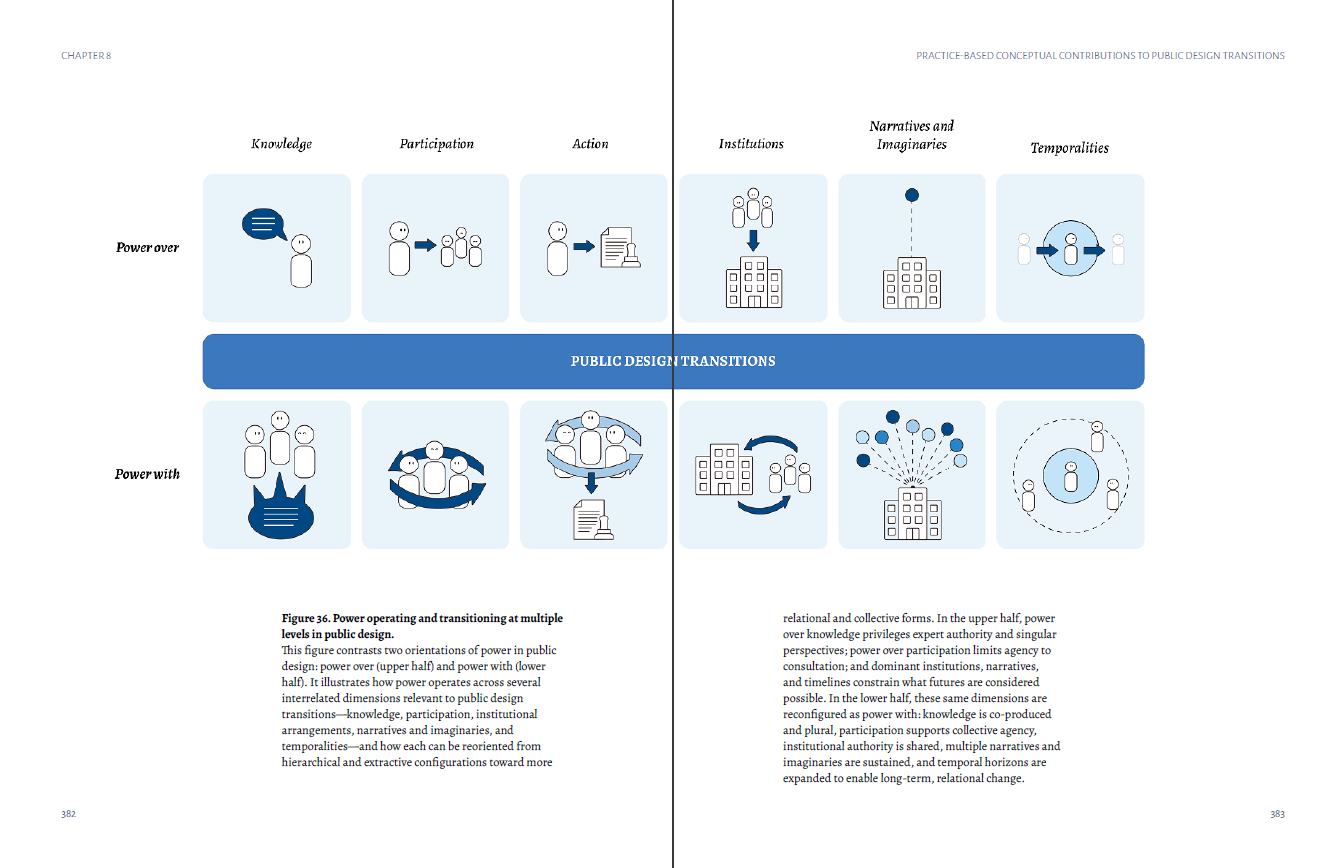
Transition-oriented design scholarship positions public institutions as agents of long-term, systemic, and place-based transformation. Yet, in Global South contexts, this work unfolds within public-sector environments shaped by structural power asymmetries, political volatility, geopolitical hierarchies, and resource constraints that delimit what forms of change are possible. Although public and transition-oriented design scholarship has advanced ambitious frameworks for addressing complex societal challenges, it has paid less attention to how these institutional and geopolitical conditions shape the durability of transition efforts within the state. This research investigates how public designers cultivate, negotiate, and sustain transition-oriented practice across asymmetrical worlds shaped by institutional power, geopolitical hierarchies, relational infrastructures, and the affective and material conditions that both enable and constrain public-sector work.
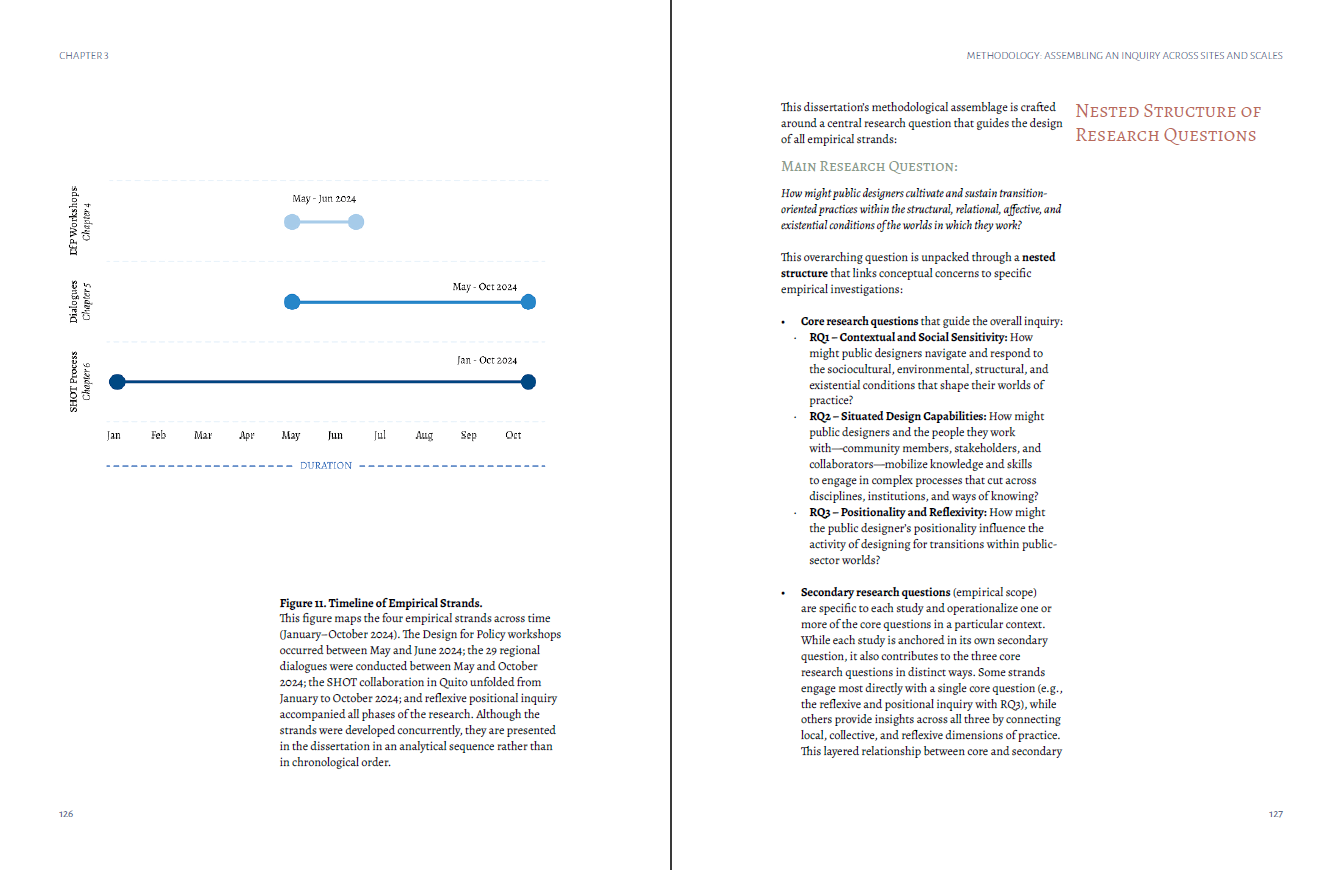
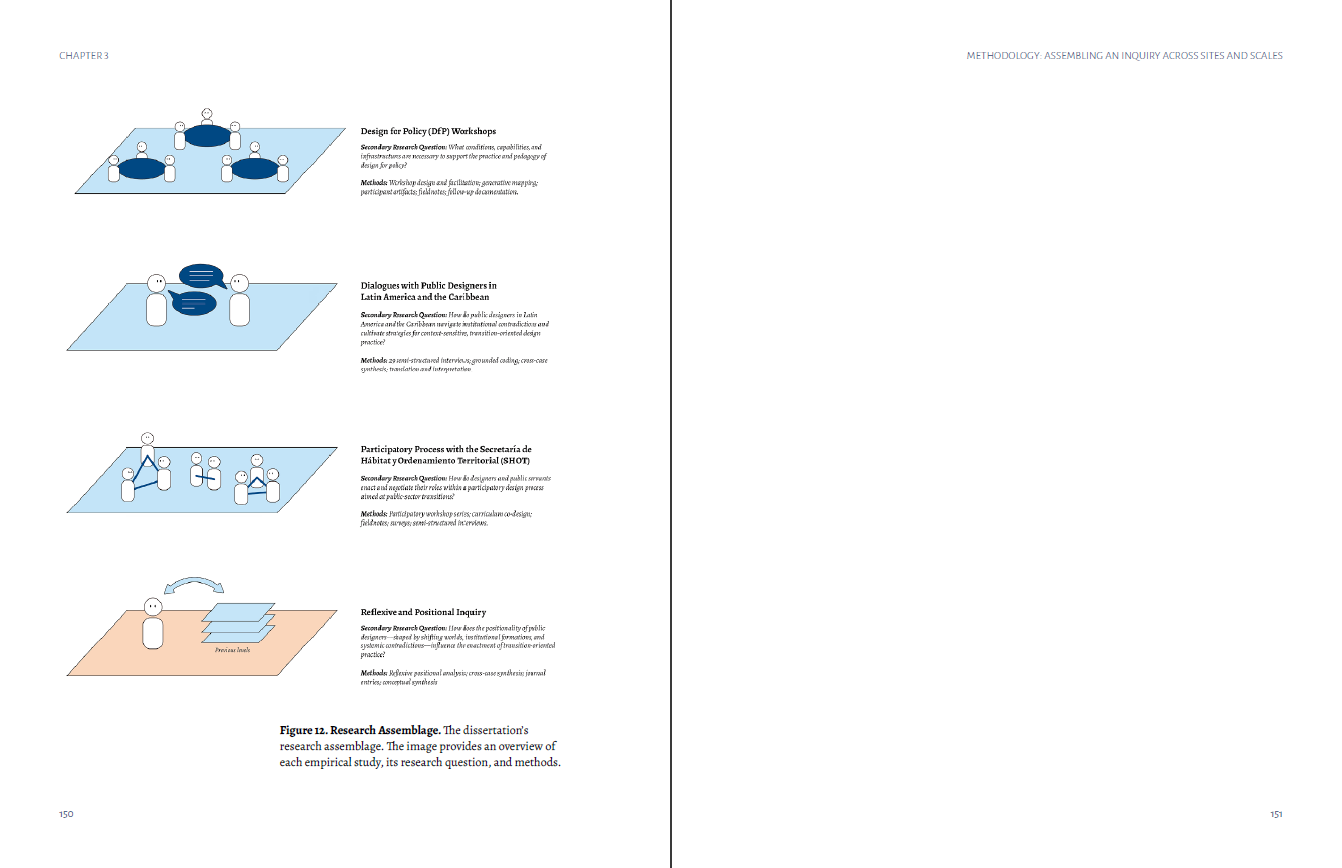
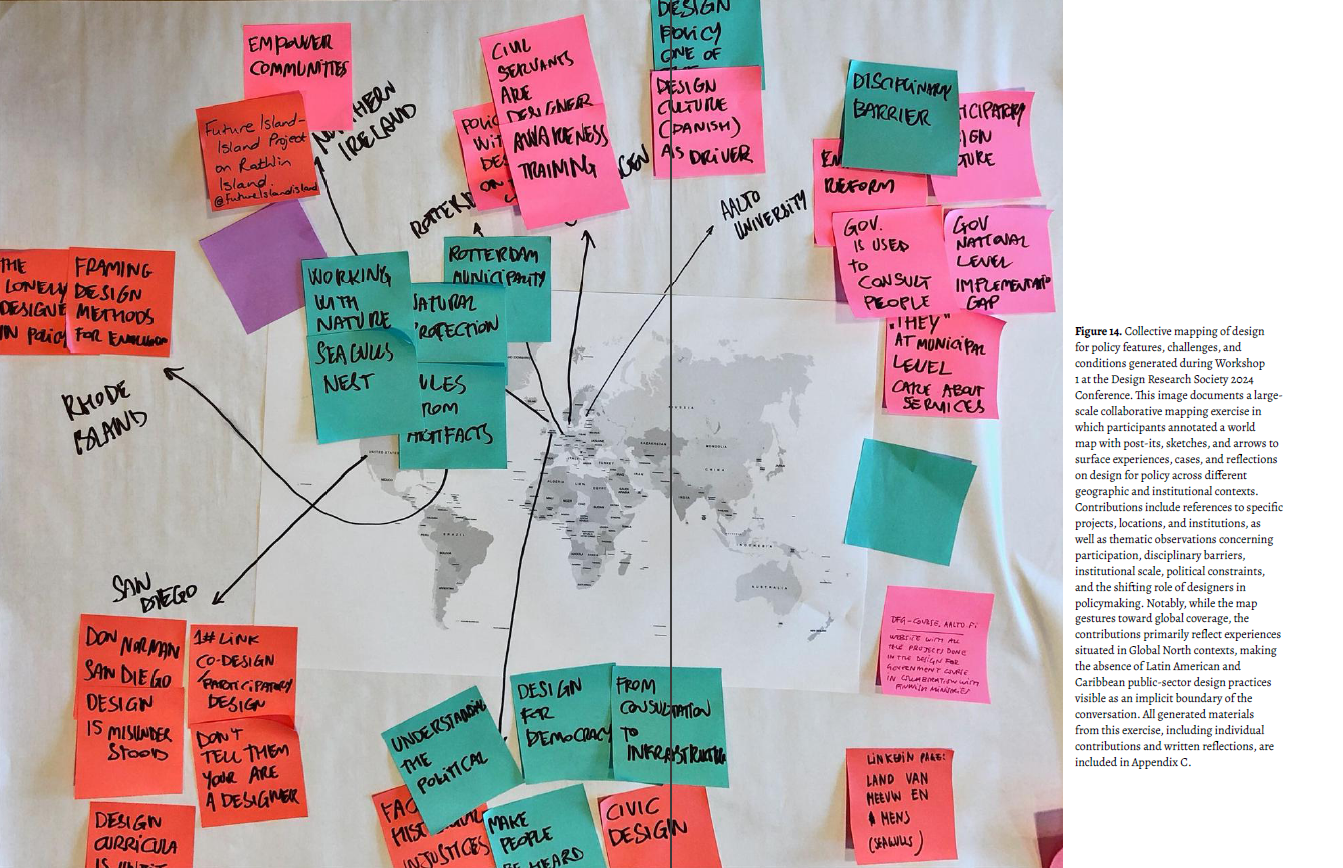
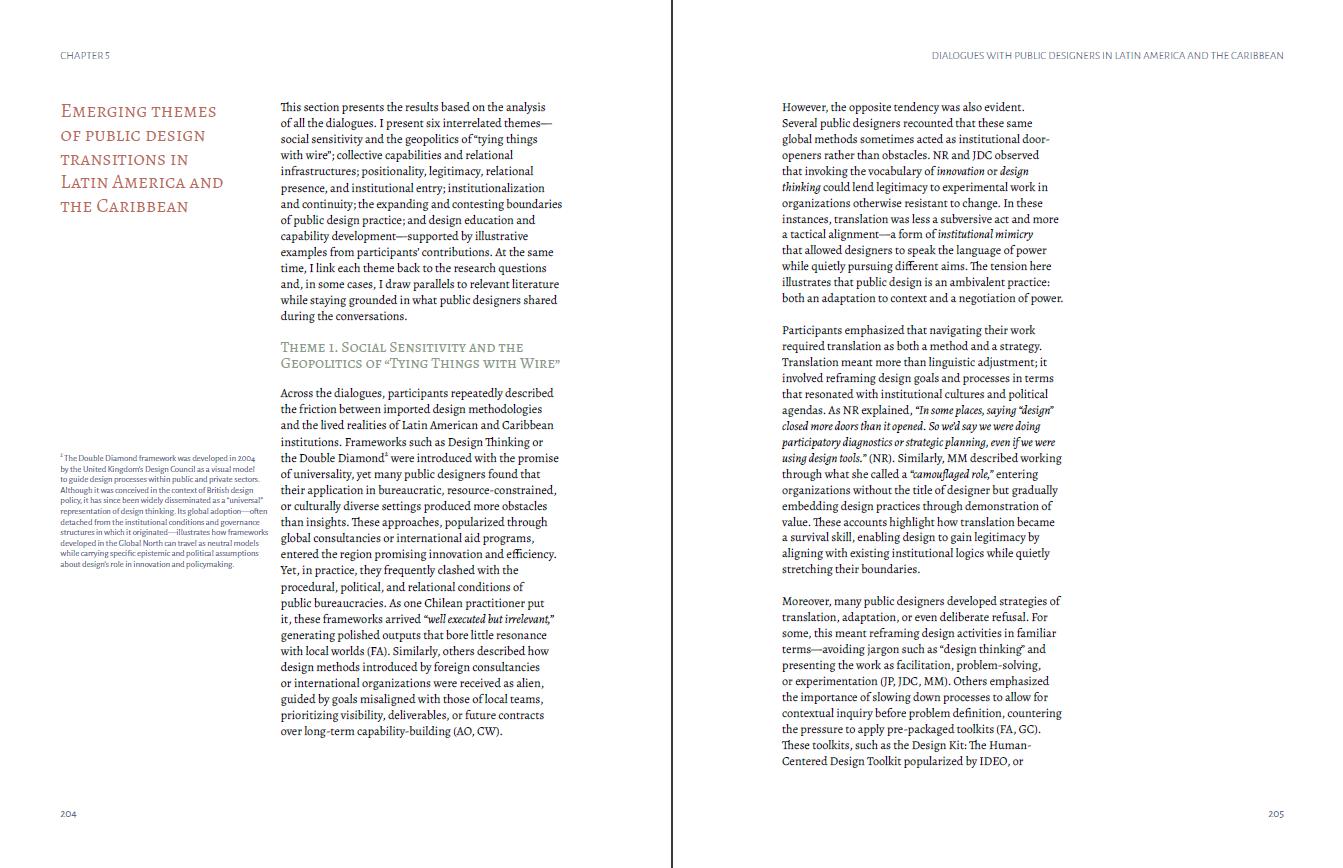
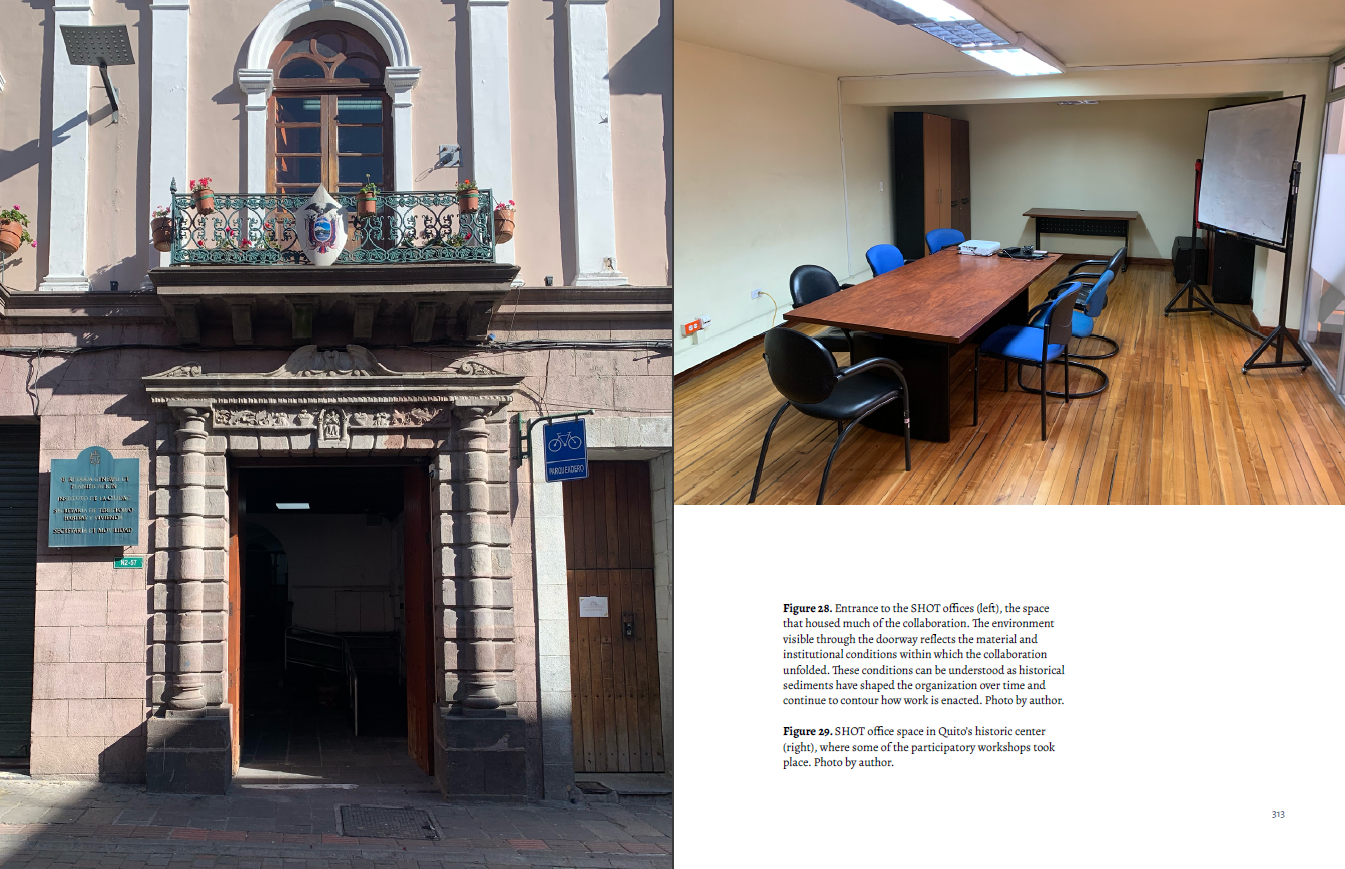
The dissertation is organized as a multi-sited methodological assemblage that integrates design-for-policy workshops, dialogues with public designers in Latin America and the Caribbean, a ten-month participatory collaboration aimed at cultivating transition-oriented design capabilities within a municipal department in Quito, Ecuador, and a reflexive positional inquiry into the author’s formation as a designer working across Global South and Global North contexts. These sites illuminate the tension between ambitions for systemic transition and the institutional realities of political volatility, limited resources, and hierarchical governance. They show how this tension shapes organizational structures and professional identities, and how public designers navigate it in practice.
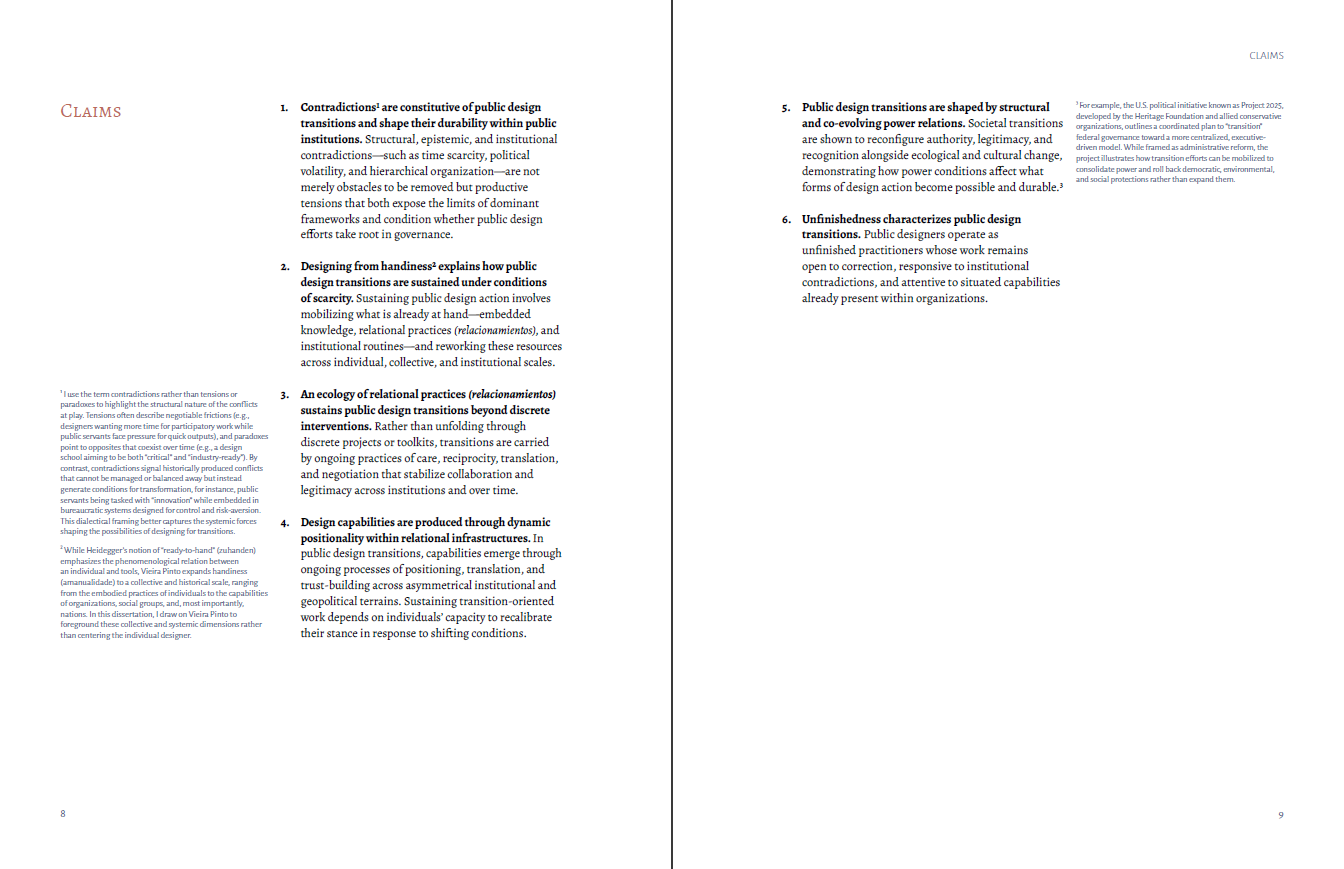
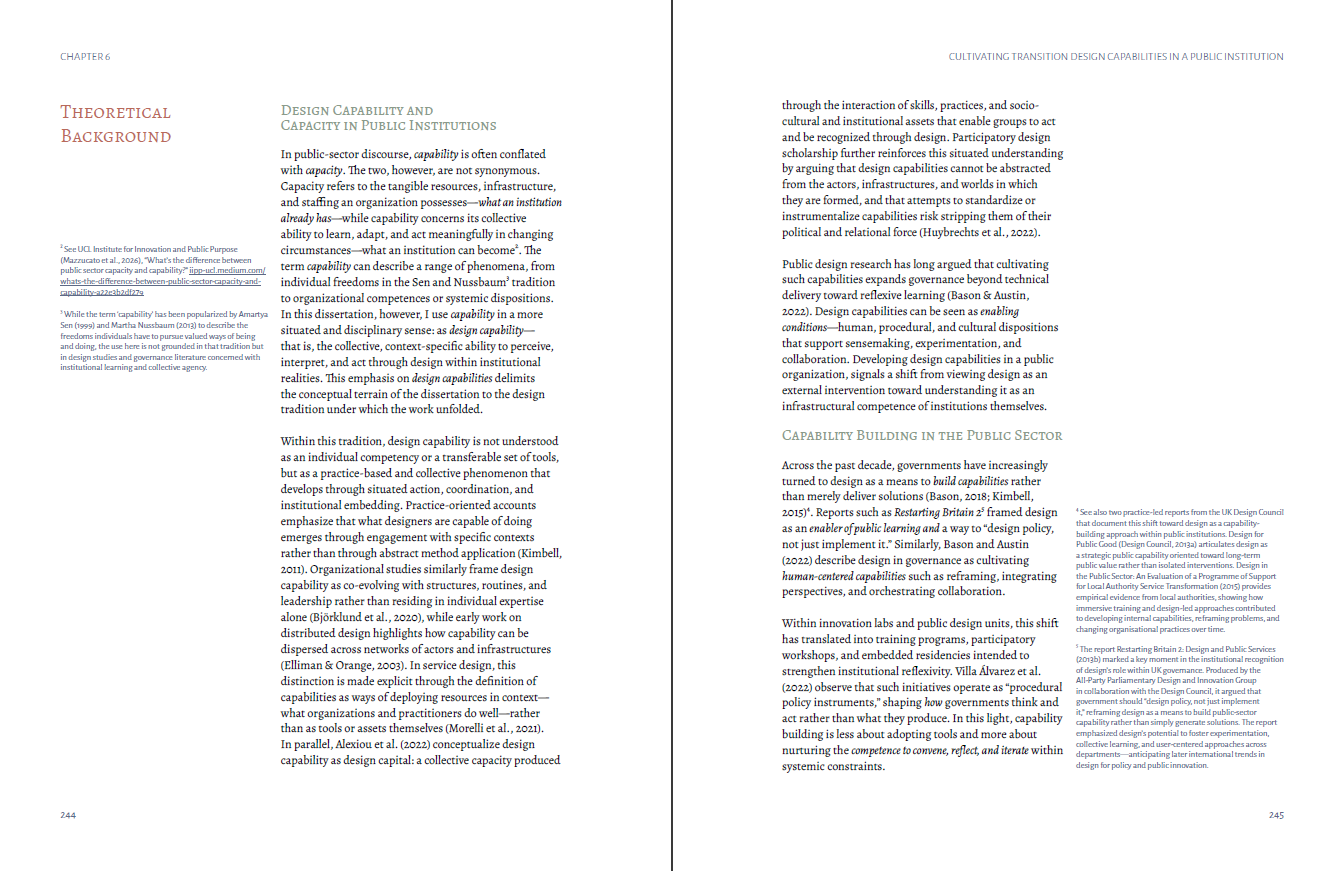
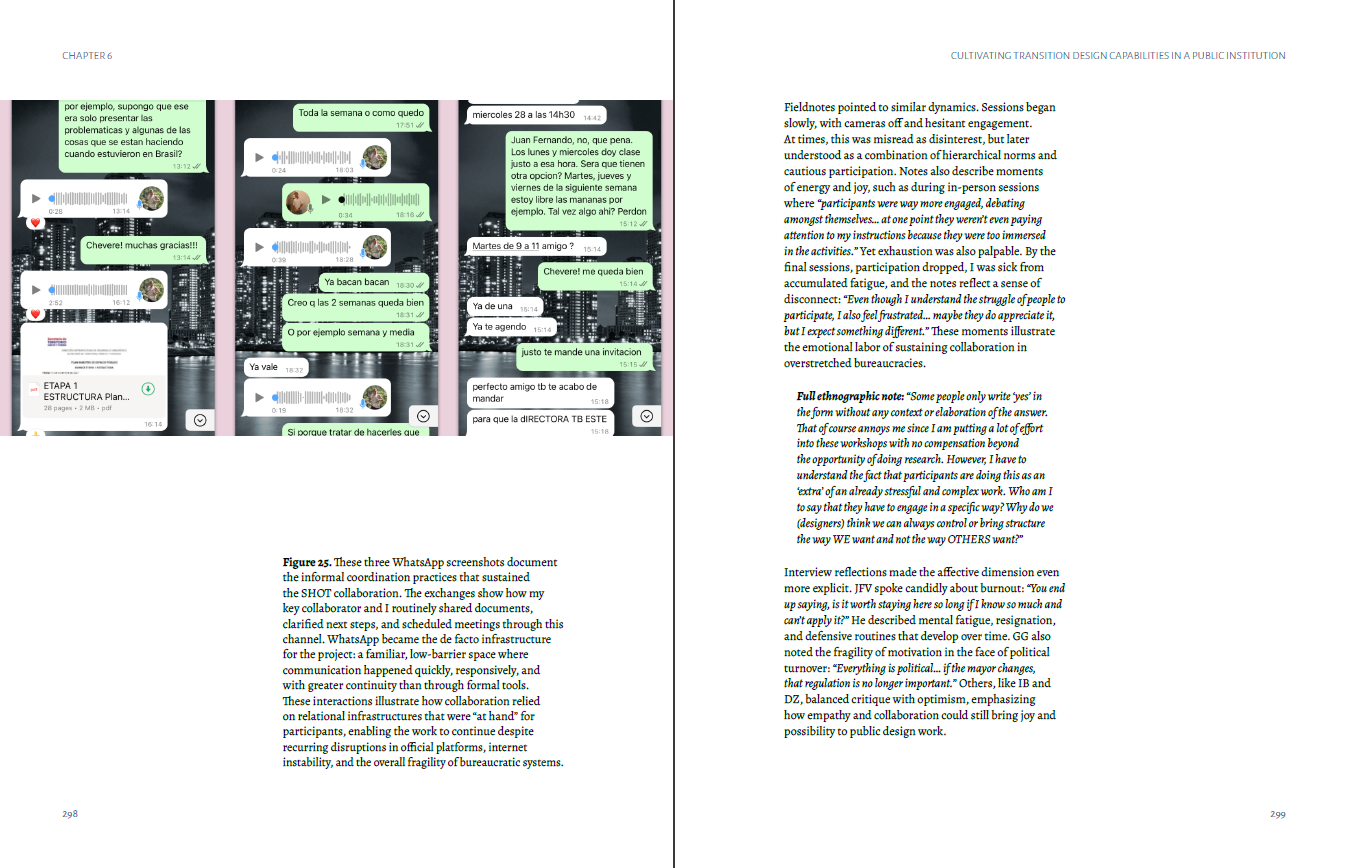
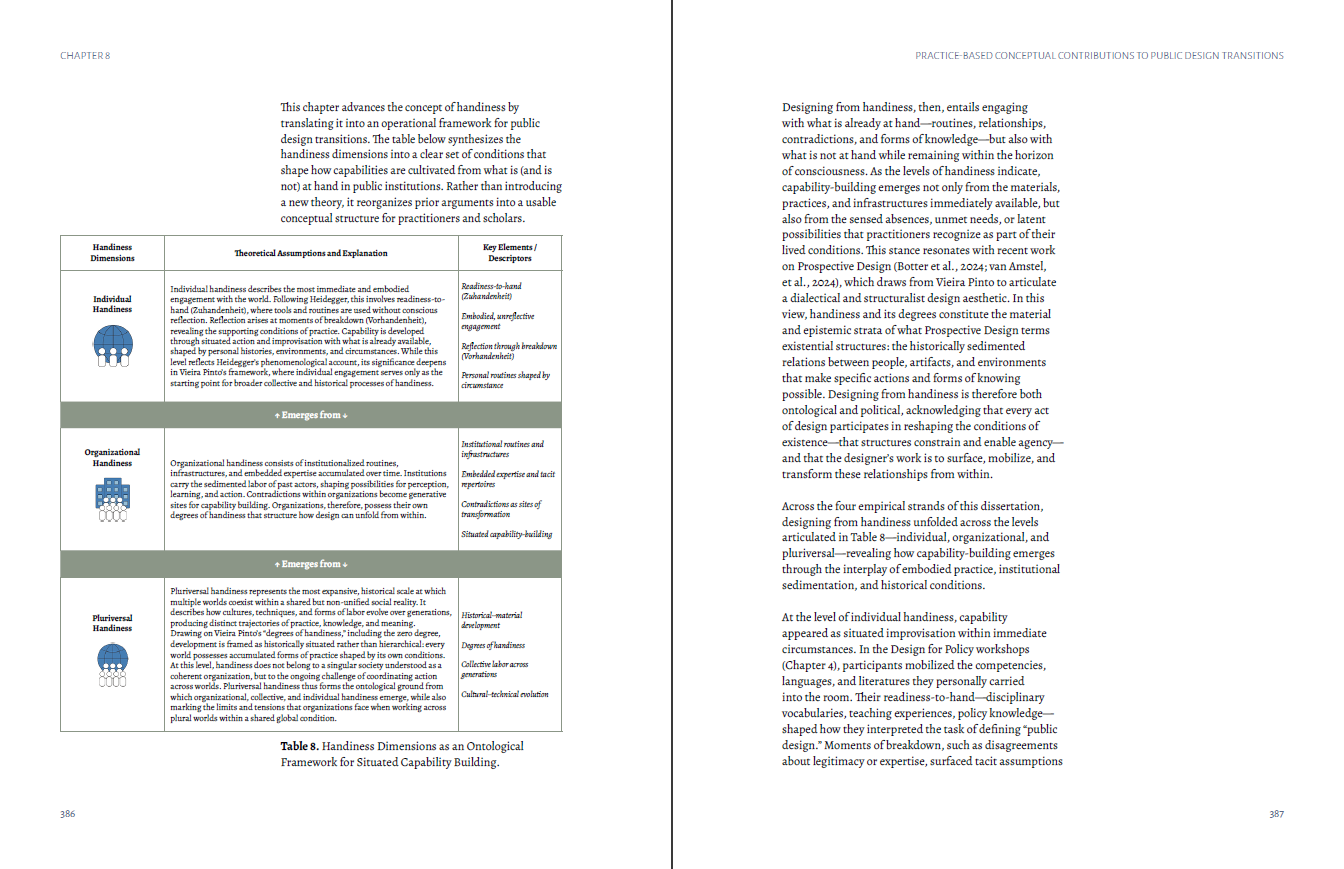
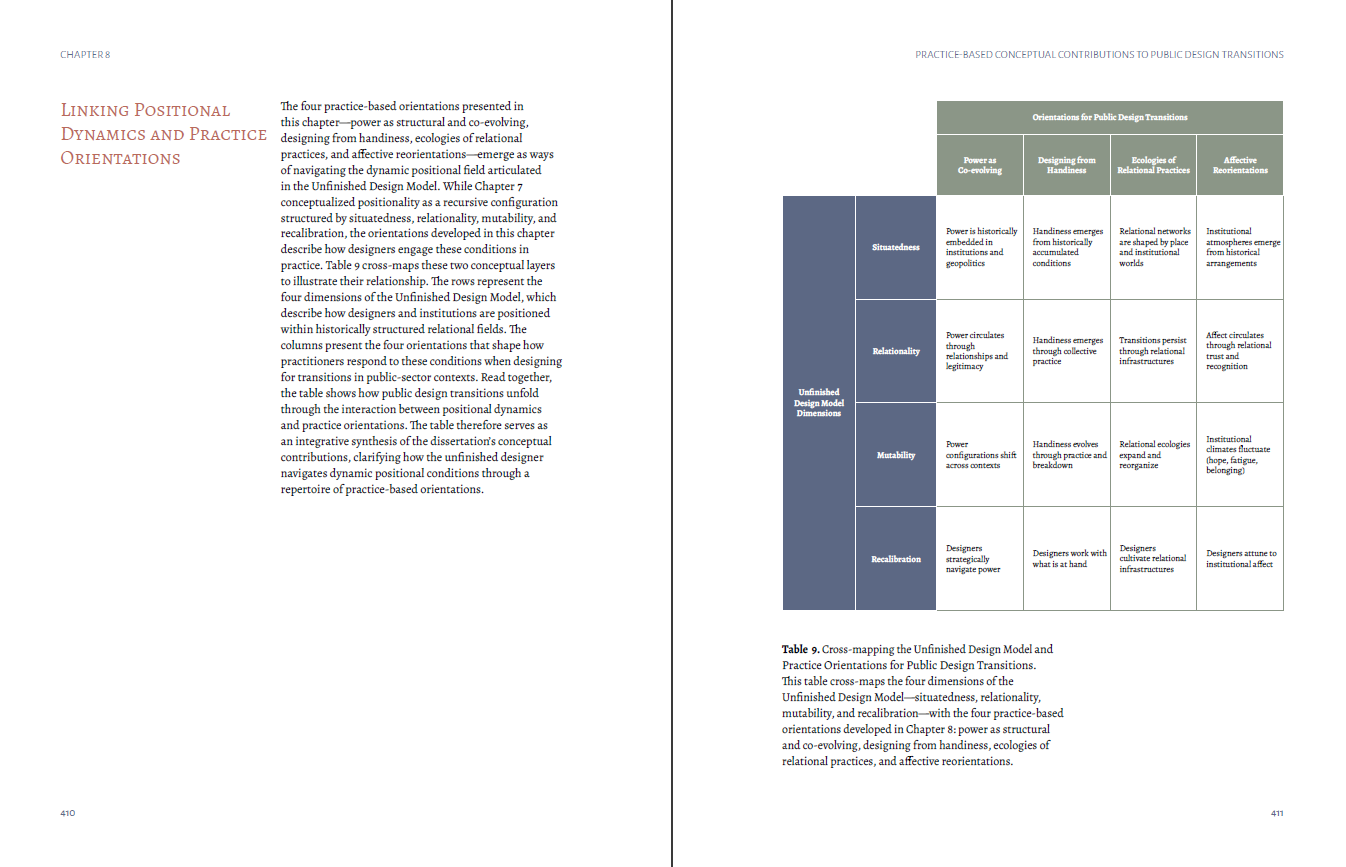
While public designers already work in deeply situated and relational ways, these practices remain undertheorized within both public design and transition-oriented design scholarship. Building on this tension, the dissertation develops the following orientations: (1) structural power, articulated as a co-evolving area of transition-oriented design, to account for how historical, political, and institutional forces shape what forms of design action become possible or constrained in public design transition projects; (2) designing from handiness, which describes how public designers mobilize existing knowledge, practices, material conditions, and relationships to work within institutional fragility and sustain collective action over time; (3) ecologies of relational practices (relacionamientos), which highlight how public design transitions are carried through networks of trust, care, translation, and coordination that extend beyond discrete projects; and (4) institutional affect, which captures how shared sensibilities circulating within organizations influence the durability, legitimacy, and direction of public design efforts.
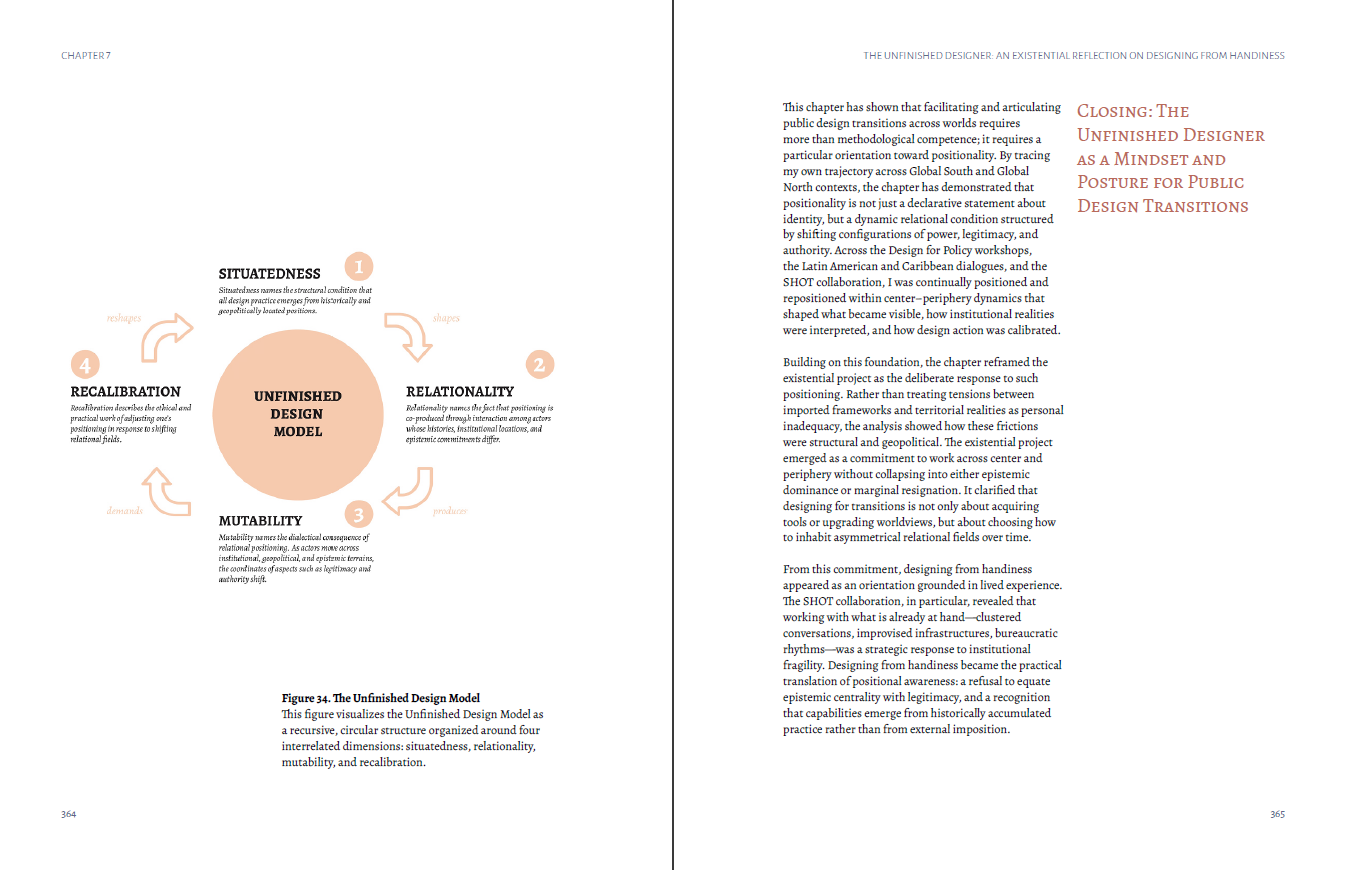
The orientations culminate in the Unfinished Design Model, an empirically grounded framework for understanding public design transitions as ongoing, negotiated, and structurally conditioned processes rather than linear programs of institutional reform. The model explains how public designers engage institutional power, sustain collaboration across asymmetrical worlds, and pursue more just and contextually grounded societal transitions from within the contradictions that define public-sector life.
Designing Between Worlds
Designing for transitions calls us toward long-term horizons, yet throughout this inquiry, I found myself learning to remain present. Across the worlds I entered, I witnessed how public design work endures not through grand frameworks, but through situated judgment, relational care, and the willingness to recalibrate one’s stance within shifting institutional terrains.
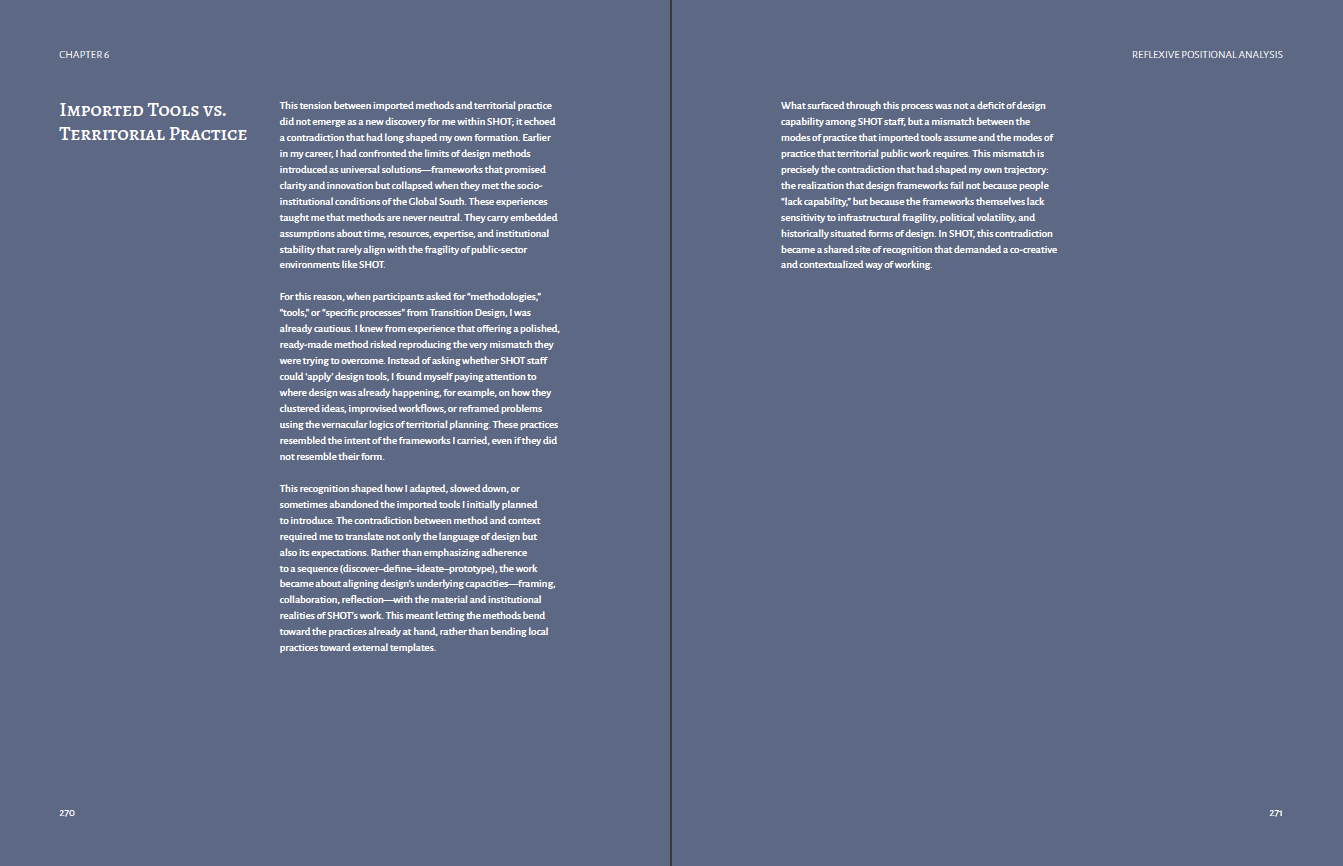
Designers are never outside the structures we seek to influence. We are formed within asymmetries of power, legitimacy, and history, and we act from within those conditions. This dissertation is therefore an invitation to approach public design transitions as embedded, relational, and ethical practices. Transitions are slow, fragile, and often invisible. They accumulate through small acts of translation, attunement, and commitment that reshape worlds over time.
I began this inquiry seeking to understand how designers cultivate transition-oriented capabilities. I conclude recognizing that such cultivation is inseparable from our own ongoing formation as shapers—and sometimes disruptors—of the worlds we inhabit. And perhaps that is the most honest condition from which to design when designing for transitions.